Barn Hunt turns a stack of hay bales and a few well-protected rats into one of the most popular scent games on the North American dog-sport calendar. The secret lies in its clear ladder of barn hunt levels of titles. Every team starts simple then climbs one level at a time, always building on what came before. Whether you want a weekend pastime or a serious path toward national rankings, understanding Barn Hunt levels is the first step.
A Quick Look at the Barn Hunt Rules
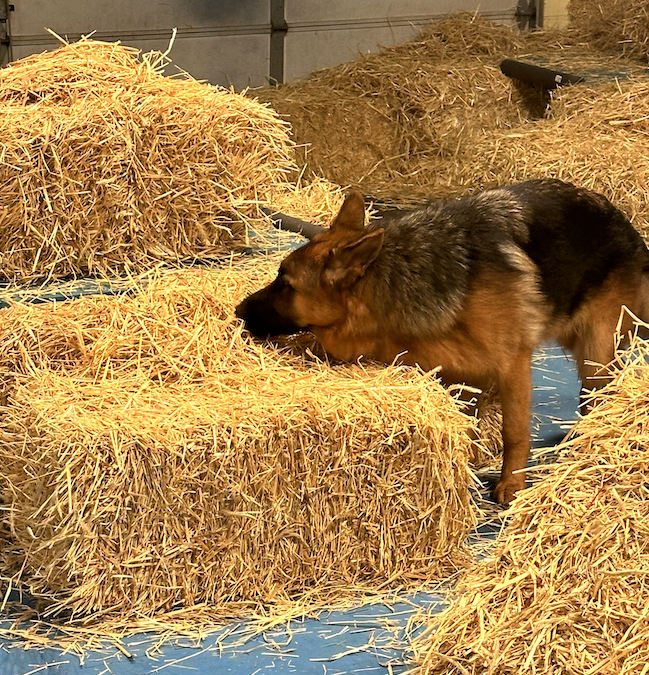
Barn Hunt simulates a traditional farm task: locating and marking rodents hiding in hay. Real rats travel inside sturdy, aerated PVC tubes that protect them completely. The judge hides those tubes among straw bales, then times each dog as it searches. Along the way the dog also needs to tunnel through bale chutes and climb on top of at least one bale with all four paws.
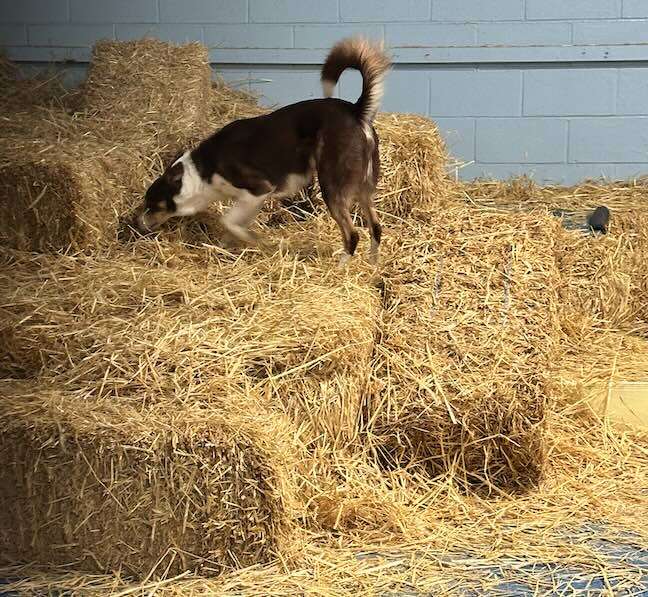
To keep the sport fair and fun across breeds, the Barn Hunt Association (BHA) created a structured progression of barn hunt levels. Each stage adds hides, lengthens tunnels and tightens time limits. You cannot skip a level; passing grades unlock the next one.
The Ladder of Barn Hunt Levels
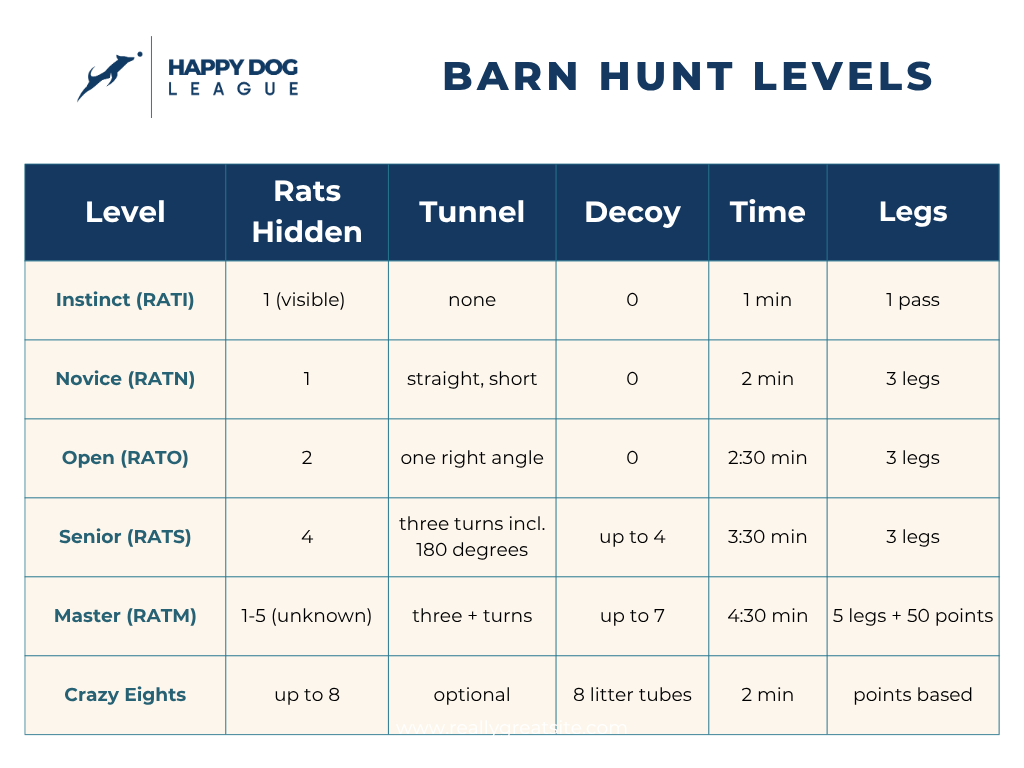
Instinct Test (RATI)
Goal: Show the dog understands that the rat scent is something worth hunting.
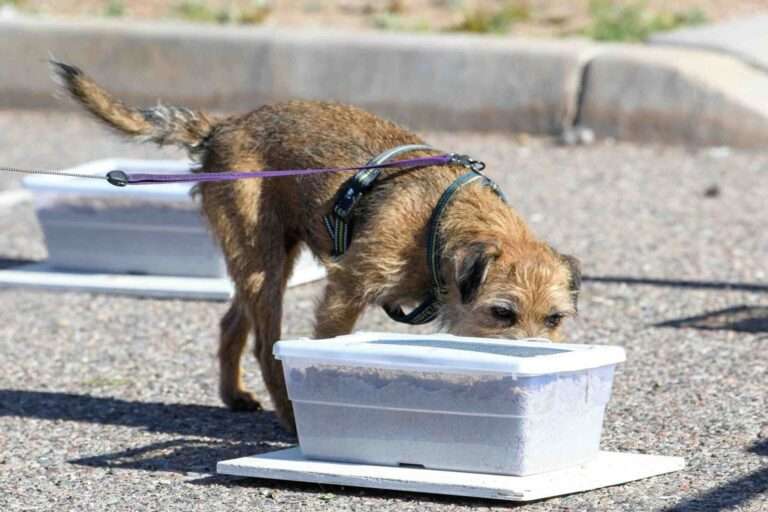
Setup: Three tubes placed in plain sight on the ground—one empty, one filled with bedding only, one containing a live rat.
Time: One minute.
Pass: Dog must indicate the correct tube. There is no tunnel or climb requirement.
Many handlers treat the Barn Hunt Instinct Test as a warm-up before entering Novice the same weekend. You earn the RATI suffix once and never repeat it, although some clubs offer instinct fun matches for extra practice.
Novice (RATN)
Hides: One rat tube.
Tunnel: Open, straight and short.
Climb: Dog must place all four paws on any bale at least once.
Course: A small maze of low bales in a 20 by 30 foot ring.
Time Limit: Two minutes.
Legs Needed: Three qualifying runs under at least two different judges.
Novice teaches dogs to work independently while still letting handlers stay nearby. Dogs learn to check air scent on the tops of bales, dive into low gaps and ignore litter tubes filled with clean bedding.
Open (RATO)
Hides: Two rats.
Tunnel: One right-angle turn, longer than Novice.
Climb: Same as before.
Course: More layers of straw bales, usually one bale higher than Novice.
Time Limit: Two and a half minutes.
Legs Needed: Three.
Open raises your strategic choices. With two rats in play you decide whether to sweep low first or send your dog up the central stack. Time management begins to matter.
Senior (RATS)
Hides: Four rats.
Tunnel: Three turns, sometimes U-shaped, with one 180-degree bend.
Litter Tubes: Up to four decoy tubes now appear.
Time Limit: Three and a half minutes.
Legs Needed: Three.
Senior tests memory and drive. Dogs must ignore decoys while tracking four scented tubes spread across multiple bale tiers. The handler’s challenge is to read subtle cues and call each find without doubting the dog.
Master (RATM)
Hides: One to five rats, but the judge never reveals the exact count.
Tunnel: Minimum of three turns, often with a squeeze entrance.
Decoys: Up to seven litter tubes.
Time Limit: Four and a half minutes.
Legs Needed: Five, and you must earn a combined 50 Master points collected from each run.
Master mirrors real pest control. Because hide numbers change with every course reset you cannot rely on a checklist. You decide when your dog has cleared the field then call “Rat” or “Finish.” Teams that love problem-solving thrive here.
Champion Titles
Barn Hunt Champion (RATCH): Earn ten additional Master legs plus the original RATM for a total of 100 Master points.
RATCHX, RATCH2, RATCH3 and beyond: Each extra 100 points adds another X or number.
Gold and Platinum Honors: Offered at advanced milestones beginning at 500 points.
Champion barn hunt levels motivate long-term play. Many seasoned teams continue because each new title confirms teamwork sharper than before.
Crazy Eights (CZ8S, CZ8B, CZ8G, CZ8P)
Crazy Eights runs alongside the main ladder. The course uses eight hide tubes and eight litter tubes inside a large, creatively stacked ring. Time limit is two minutes. Each hide spotted equals ten points; each successful tunnel adds ten; the climb is worth twenty. You must decide where to spend energy. Crazy Eights points lead to Bronze, Silver, Gold and Platinum titles independent of your RATCH count, giving thrill-seekers a bonus track.
How Courses Evolve Through the Barn Hunt Levels
At first glance every Barn Hunt course looks like a messy hay maze. Yet careful study shows a logical evolution:

Tunnel length increases gradually so pups learn to trust tight spaces. By Master the dog dives into a dark multi-turn tube without hesitation.
Hide height moves higher with each stage. Novice hides rarely sit more than one bale high, whereas Senior hides may perch three bales up, forcing dogs to check vertical scent cones.
Decoy tubes start at zero and rise to seven by Master. Dogs learn lure discrimination, ignoring bedding scent until they find live quarry.
Time pressure stays reasonable yet forces efficient hunting. Handlers who waste seconds arguing with a dog about a found tube often time out, proving trust matters more than control.
Clubs follow exact building diagrams from the BHA rulebook but can shape the bale stacks differently at every trial, adding replay value.
Title Counts and Scoring
Each qualifying run is called a leg. Your dog must locate all required hides, perform the tunnel and climb and finish inside the time limit. In Master and Crazy Eights you gain points in addition to legs. Points equal seconds left on the clock plus bonuses for extra hides. Championships add up those points, turning speed into a tie-breaker.
The BHA tracking portal updates scores within weeks of a trial. Many handlers screenshot their dashboard after each weekend to celebrate progress.
The Community Impact of Barn Hunt Levels
Handlers love Barn Hunt because level progression keeps them engaged for years. The sport welcomes seniors, suburban families and apartment dwellers alike. Straw bales can be stored in garages or rented by clubs from local feed stores, so start-up costs stay manageable. Many agility or obedience clubs now host Barn Hunt weekends which boosts fundraising and draws fresh faces to dog sports.
Dogs benefit too. Independent hunting strengthens confidence in shy individuals and channels energy for high-drive breeds. Even reactive dogs often flourish because ring boundaries and blinds prevent direct contact with other canines. Veterinary behaviorists sometimes recommend Barn Hunt as part of enrichment plans for anxious pets due to its naturalistic challenge without high physical strain.
Barn Hunt levels transform a simple sniffing game into a structured journey filled with ribbons, personal milestones and cheering friends. From the first Instinct pass to the thrill of calling Finish on an unpredictable Master course, each title teaches a new lesson in teamwork. Dogs learn perseverance and impulse control. Handlers learn to trust subtle body language. Together they celebrate a very ancient partnership: dog and human working side by side to solve nature’s oldest puzzle, the scent trail of a hidden quarry.
If you have ever watched your dog shove a nose into leaf piles with gleeful determination, Barn Hunt may be your next weekend adventure. Visit a local club, borrow a tube, and play a backyard round tonight. You might discover that your couch companion is a born hunter, ready to climb each level until the letters RATCH sit proudly after a well earned registered name. The bale maze awaits. Happy hunting.
Barn Hunt FAQs
What dogs can play Barn Hunt?
Any healthy dog over six months can enter. Mixed breeds, tiny toys and giant guardians all succeed when properly conditioned.
Is the rat safe inside the tube?
Yes. The tube is ventilated PVC with end caps secured by wire clips. Rats rotate out after a few runs to reduce stress. Many clubs partner with local rodent hobbyists who treat their rats as beloved pets. You can read more about barn hunt myths.
How do I know when my dog is indicating?
Indications vary. Some terriers scratch frantically, while herding breeds freeze and stare. Train a consistent alert such as a paw tap or nose press to make judge calls easier.
Does my dog need formal obedience first?
Basic leash manners help but are not mandatory. The hunt drive matters more than perfect heeling. Focus on building a strong reward history with the rat scent.
How do I find trials near me?
Visit BarnHunt.com, click the event calendar and filter by state or province. Club websites list premium lists and entry dates.
Is there a national ranking system?
Yes. The BHA publishes top ten lists by level each year. Championships and Crazy Eights points both feed into leaderboard standings.